How the right spices made our healthy food really taste amazing
 Written by: Kertu from PureNature
I believe that quite a lot of people who wish to eat more healthily fear that healthy food might automatically mean tasteless food. When people think of a healthy diet, often a rather boring picture comes to mind – cooked vegetables and salad greens. Food that is good for the body but not very exciting for the taste buds. The difference is particularly stark if you’re used to ultra-processed and fatty foods.
Our family’s experience was quite similar at first. When we started paying more attention to what we were eating, the menu became much healthier but surprisingly tasteless at the same time. I probably could have stayed eating that way, but our three younger children often refused to eat, and every meal was accompanied by a strong protest. Cooking without dairy, gluten, meat, eggs and sugar was already a challenge for us. The result was food that, while healing, no longer offered the same pleasure and eating experience as before. Fortunately, we pretty quickly found The PureNature Recipe Archive where you can find an incredible amount of guilt-free recipes and which will give you the reassurance that healthy food does not equal tasteless.
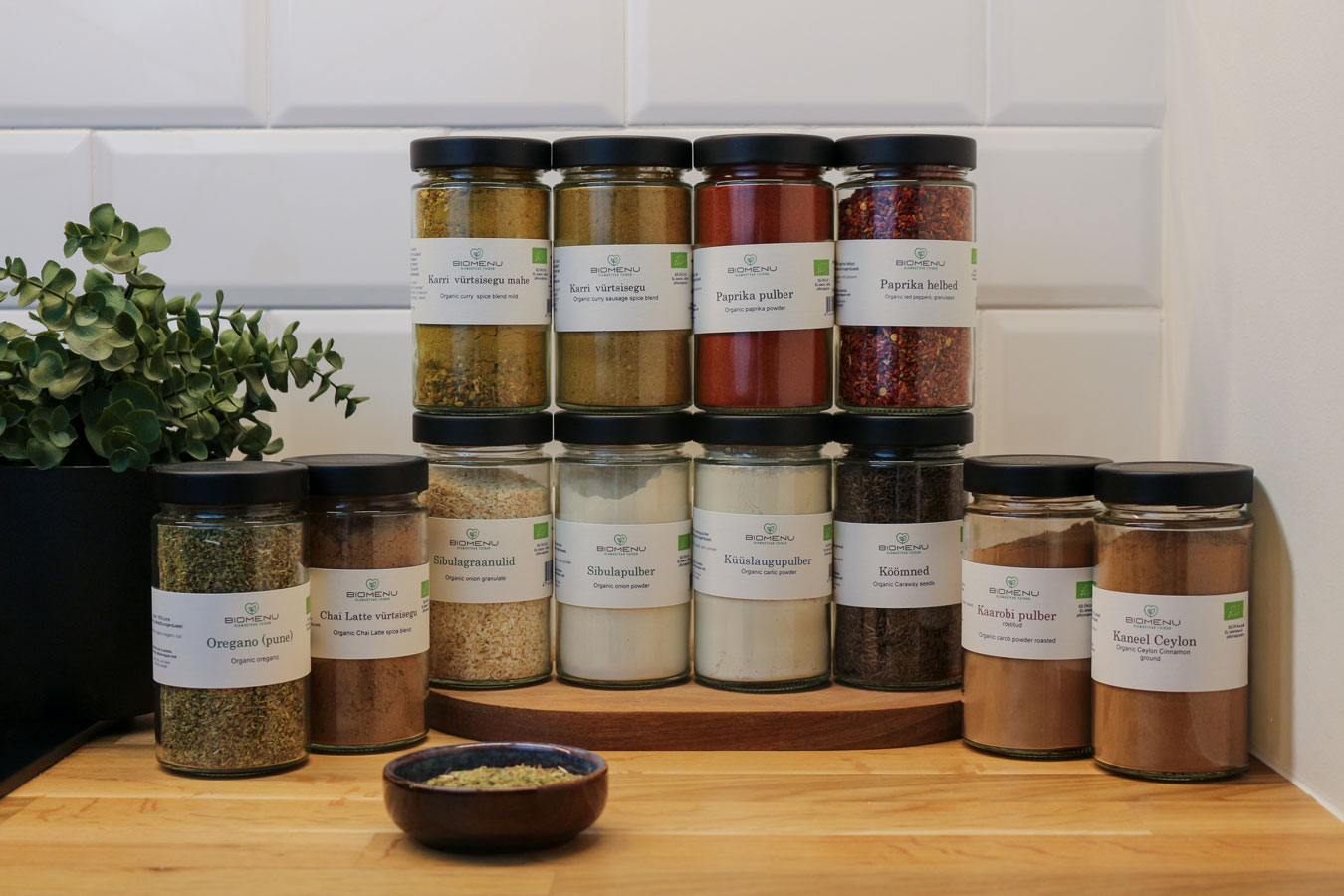
Thanks to these recipes we discovered something very simple yet powerful – spices. Not just any seasonings, but those that help to heal the body and make even the simplest food so delicious that even our demanding children eat it and praise. I’m talking about BioMenu Seasonings.
An interesting fact about spices: when a spice is fresh, its flavor is concentrated, not diffused. The essential oils have not yet oxidized and the flavor has not changed. This means that a smaller amount is enough to achieve a better result. You don’t need to add a double amount to get the flavor. On the contrary, just a pinch of spices can give your dish a depth of flavor that an older batch of seasoning will miss.
Up until then, we had been using fairly standard store-bought seasoning or spice mixtures, which we then poured on the food to make it tasty. We had never even considered what they actually contained, but with the change in diet came a new knowledge about spices. It became clear that just as important as the use of seasonings was actually also the quality of the seasonings . We started to keep track of what seasonings we were adding to our food in the first place and what they contained. As I always tend to go into a lot of detail when I delve into a subject, I started to do more research on seasonings. The more I read about it, the clearer one thing became – when it comes to spices and seasonings, it’s always best to opt for organic.
Why is it important to use organic seasonings?
Conventionally grown spices may contain residues of pesticides and other chemical products used for pest control during the growing season. Because of the highly concentrated nature of spices, these residues may also be more concentrated in spices than in other foods and products.
In addition, conventional seasonings might have additives such as:
- Anti-caking agents
- Flavor enhancers
- Fillers
- Artificial flavourings or colourings
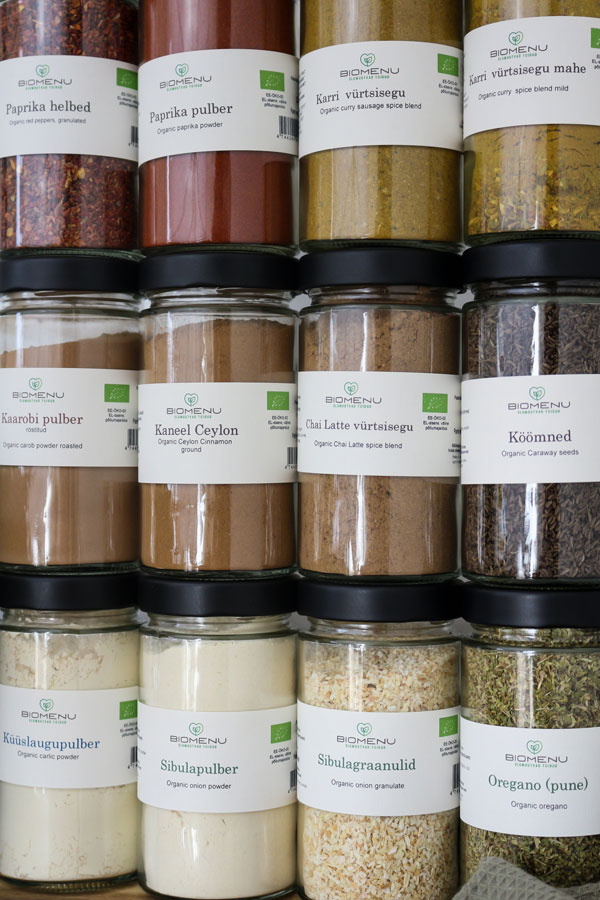
These things may not always pose a direct health risk, but they are also not something we would consciously want to include in our daily diet. That’s why we now prefer organic spices and seasonings, which are grown without synthetic pesticides and which usually have a much cleaner and simpler ingredient list. Most of Biomenu’s spices contain only one ingredient and are 100% organic.
A pinch of the right seasoning can add depth to vegetables, give soups what they were missing, and give salads a whole new character. With the right seasonings, healthy food can be richer and more interesting than many traditional dishes.
Over time, it became clear to us that spices are not just a small addition to food. They are the most underrated heroes in the kitchen that can transform the entire food experience; and when seasonings are of high quality and freshly ground, the difference is even greater.
Why are freshly ground spices better?
Have you ever cooked with spices that have been sitting in the cupboard for years? If so, you’ve probably been missing out on a whole world of flavors.
Imagine opening a jar of seasoning and the whole kitchen is filled with a strong, authentic aroma. Not a faint, vague smell, but an aromatic and intense spicy smell. That’s exactly what happened to us when we first ordered BioMenu spices to our home. I had never experienced before that spices can be so aromatic that even those who were far away from the open jar could smell it. That’s the difference between freshly ground spices and old spices. If you value clean food and conscious consumption then this difference is probably important for you as well, and that’s why our whole family loves BioMenu Spices. They’ve even got the kids interested in cooking and flavoring so it’s a great way to get the little ones in our family involved in the world of cooking.
In fact, taste is not just what you feel on your tongue – most of the taste experience comes from the aroma. Freshly ground spices release their aroma the moment they are used. The kitchen is filled with a specific aroma that gives you an idea of the quality of the food even before you take your first bite. It is these more subtle and volatile aromas that are first lost when spices have been standing on the store shelves for a long time. A strong or pungent note may remain, but the nuances will disappear.
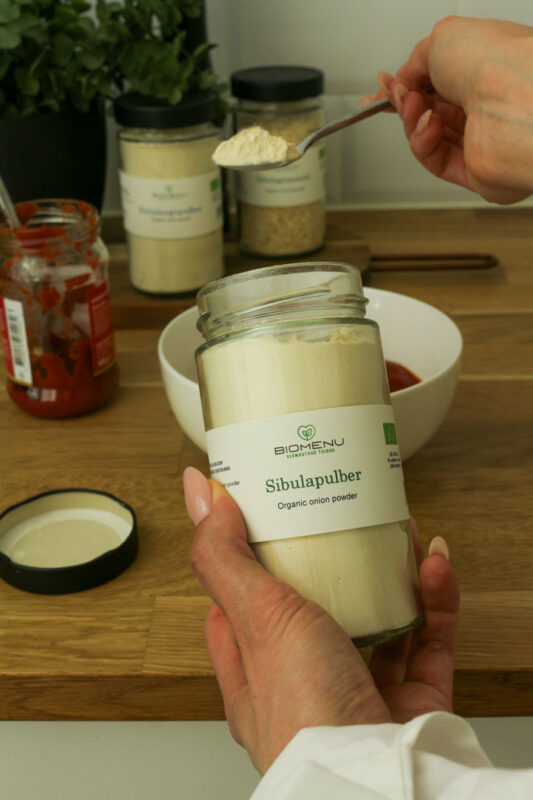
Onion powder is very often used in recipes from PureNature, and since I had never tried onion powder before, we decided to give it a try and ordered it. From the first time I used it, I understood why it is so often used in different recipes, as it made the food taste much more interesting than fresh onion alone did. The kids loved it so much that I had to put the onion powder out of their reach so they didn’t sprinkle it everywhere in large quantities or eat it straight from the jar! It instantly became one of our family favorites.

Health benefits from spices
For me, it has always been very important that what we eat at home is good for our health. Herbs are known to be very good for overall health. This is because they are rich in natural bioactive compounds such as antioxidants, essential oils and various vitamins/minerals that positively support various body processes.
I had been looking for an alternative to regular salt for a while; we were using Himalayan salt at home. As I read more about spices, I became wiser about salt, too. Did you know that you can substitute your salt with ground seaweed? Dulse or Kombu flakes, for example, are a particularly good substitute. Dulse offers a distinctive salty and rich flavor without the high concentration of sodium. For this reason, dulse is a good substitute for sea salt, Himalayan salt and regular white salt. Sprinkle dulse on top of pasta, pizza, salad, vegetables – there are so many possibilities! We buy our Dulse from PureNature because their Wild Irish Seaweed products are organic and undergo regular laboratory tests to check for heavy metals and other unwanted elements in the product; and the extra convenience of being already in a ground form makes this product very easy to use.

Many herbs are known for their anti-inflammatory, antibacterial and digestive properties. For example, several spices help stimulate digestion, support the immune system and improve nutrient absorption. They can also help reduce oxidative stress in the body, which is linked to the development of many chronic diseases. The antioxidants in spices and herbs are very effective as they have high antioxidant activity.
For example:
- Turmeric contains curcumin which has been attributed with anti-inflammatory and antioxidant properties. The content and activity of curcumin may decrease if the spice is exposed to air and light for longer periods.
- Cinnamon contains cinnamaldehyde which gives cinnamon its distinctive smell and has been linked to supporting blood sugar balance. This spice is also sensitive to oxidation.
- Cloves are one of the most antioxidant-rich spices, containing eugenol, which supports the body’s natural defences.
- Oregano and thyme contain compounds of carvacrol and thymol, which have been studied for their antimicrobial properties and help to preserve flavor.
Therefore, spices are not just a way to make food tastier, it’s also worth using spices and herbs in everyday cooking to support your body’s natural balance and well-being. Choosing the right, freshly ground spices can be a small but important part of a healthy diet.
A little tip! Did you know that some spices can also be used to make delicious and healing tea? For example, if we don’t have any fresh thyme at hand, we make our nightly thyme tea from BioMenu’s Dried Thyme. If you constantly have to go to crowded places and feel like you need extra protection from the various viruses circulating around, thyme tea could be your daily protector. You can read more about the healing thyme tea HERE.
Storage and shelf life
The most effective way to store spices is to minimize exposure to oxygen, light, heat and moisture. Opaque, airtight glass jars with rubber-sealed lids are best. Plastic allows up to ten times more oxygen to pass through than glass. Spices should be stored separately in a cool cupboard, away from stoves, dishwashers and windows. The ideal temperature is 15-18 °C and humidity below 50%. Ground spices usually retain their best flavor for 4-8 months.
Signs that the spice needs replacing:
- Faded color
- Faint or no aroma
- Very little taste
Did you know that the color of the seasoning in the jar speaks quality? Have you ever noticed that store brought paprika powder is often a faded brickstone red? Freshly ground paprika is bright red and smells sweet. The faded color may indicate an oxidized product.
In mass production, the spice goes through a long and slow process. First, the spice is ground in large quantities, often in the country of origin. It then sits in warehouses, sometimes for weeks, sometimes for months. Then it is transported to another country where it is packaged, moves on to the wholesale warehouse and finally to the food store. There it may stand for several more months. During this time, the product is technically fine, but its most valuable part, the essential oils and volatile fragrance compounds, have gradually degraded through constant exposure to air.
In case of freshly ground seasonings, the logic is the opposite. The spice is ground in small batches and during a short period of time just before sale. This means that the aromatic oils are retained, the flavor is stronger and more aromatic, and the natural color is brighter.
 Part of the time my family and I live in Spain, where it’s quite common for spices to be sold in open bags at the market. Because they smell so inviting, we used to buy all our spices there in the past. However, when we used them at home, we realized after a while that their real flavor and aroma had disappeared. I started to do more research on it and what I found out made us stay away from spices sold at the market from then on.